
Your Body Doesn't Care About Your Training Plan - It Cares About The Signal You're Sending


Opinion & Analysis | Exercise Science & Injury Prevention
We talk a lot about progressive overload, periodization, and training age. But there's a thread running through all of it that most people - even well-educated practitioners, still underestimate: the relationship between load, tissue capacity, and biological age is far more dynamic, and far less forgiving, than most training frameworks give it credit for.
Here's my honest take: the exercise science world has done a brilliant job teaching people how to train. It's done a considerably worse job teaching people when the rules change, and why those rules change differently depending on where you are in the lifespan. The result is a lot of well-intentioned athletes getting hurt, a lot of older adults undertrained out of excessive caution, and a lot of misattributed injuries blamed on bad form when the real culprit was simply accumulated load that outpaced tissue adaptation.
Let's get into it.
The Fundamental Mismatch Nobody Talks About
At its core, load management is about one thing: the ratio of the stress you apply to a biological system versus that system's current capacity to absorb and adapt to that stress. This is sometimes called the "demand-capacity gap," and it applies to every tissue in the body; muscle, tendon, bone, cartilage, the nervous system itself.
The problem is that most people conflate muscular fatigue with systemic readiness. Your cardiovascular system and your muscles can recover in 24–72 hours. Your tendons and bone mineral density? We're talking weeks to months for meaningful structural change. Collagen synthesis in tendinous tissue has a half-life of roughly 100 days. Training a tissue past its structural adaptation rate is the most underappreciated mechanism behind overuse injury, and it's almost universally invisible until it's not.
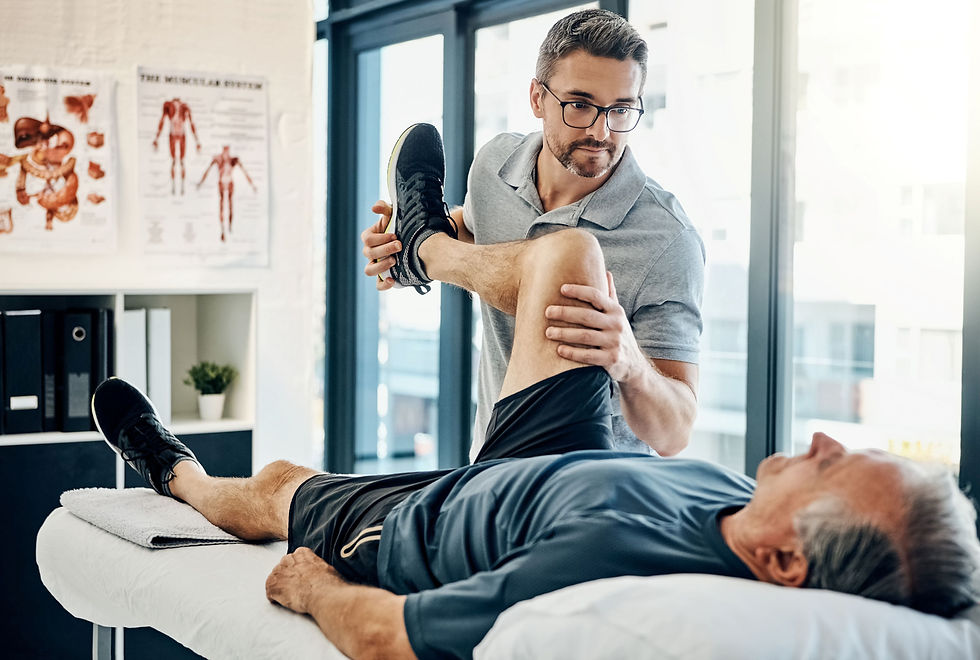
The thing that makes this genuinely tricky is that pain is a lagging indicator of tissue damage. By the time you feel something in your patellar tendon, you're likely dealing with structural disruption that began accumulating weeks earlier. This is why the classic "I felt fine yesterday" story exists. You probably did feel fine. That doesn't mean the tissue was fine.
Training load should be thought of as a conversation between you and your tissues, and your tissues speak very, very slowly.
How The Lifespan Completely Rewrites The Rules
Here's where most exercise programming frameworks fall short: they treat the human body as a roughly stable system that just needs the right stimulus applied correctly. In reality, the underlying biology of every tissue is in constant flux across the lifespan, and those changes profoundly alter both what your body needs and what it can safely tolerate.
EARLY CHILDHOOD (Ages 6–12) — The Unappreciated Window
Bone and connective tissue are highly responsive to mechanical loading in childhood. This is a genuine window for building architectural resilience, and it's widely underutilised. The issue isn't a lack of activity in many children; it's a lack of the right kind. Varied, multidirectional loading that creates heterogeneous mechanical stress across growing bones is the stimulus that drives adaptation. Monotonous sport-specific training before skeletal maturity does the opposite, it biases stress to predictable zones, which is a setup for stress fractures and apophyseal injuries later.
ADOLESCENCE (Ages 12–18) — The Danger Window

The adolescent growth spurt is one of the most overlooked injury risk periods in sport. During peak height velocity (PHV), bone grows faster than the surrounding musculotendinous structures can adapt. The result is a transient mismatch where relative muscle tightness increases, tendon insertion sites are under elevated tension, and apophyses; the cartilaginous growth plates at tendon attachment sites, are genuinely vulnerable to avulsion or chronic traction injury. Osgood-Schlatter and Sever's disease are textbook examples, but the principle extends far beyond them. This is not the time to be dramatically ramping training volume.
PRIME ADULTHOOD (Ages 25–55) — The Illusion of Invincibility

Adults in this window are often the most psychologically resistant to load management concepts, because they still feel capable of absorbing large training loads, and often are, in the short term. The insidious issue here is that the tendon and connective tissue changes that eventually manifest as chronic tendinopathy or degenerative joint changes are quietly accumulating in the background while the muscles maintain performance. The "I trained hard all through my 30s without issue" narrative often ends abruptly somewhere in the late 40s, when the accumulated structural debt comes due all at once.
OLDER ADULTHOOD (Ages 55+) — The Miscalibrated Caution

This is where the exercise world often gets it backwards. The prevailing cultural narrative, that older adults should be careful, go easy, stick to low-intensity exercise, actively harms the population it's trying to protect. Bone mineral density, muscle cross-sectional area, tendon stiffness, and neuromotor coordination all respond robustly to appropriate loading well into the eighth and ninth decades of life. The key word is appropriate. Undertrained older adults are at far greater risk of the fall, the fracture, the catastrophic event than those who have maintained load-bearing capacity through deliberate, progressive resistance training.
The Acute:Chronic Workload Ratio - Useful, But Misunderstood
By now most practitioners are familiar with the Acute:Chronic Workload Ratio (ACWR), the idea, largely popularised by Tim Gabbett's work with professional athletes, that your risk of injury spikes when your short-term load (typically the rolling 7-day average) substantially exceeds your long-term load (the rolling 28-day average). The "sweet spot" is roughly 0.8–1.3, and the risk curve bends sharply upward above 1.5.
This is a genuinely useful framework, and the broad insight, that spikes in load relative to your habitual baseline are dangerous, is robustly supported. But it gets applied with a bluntness that it doesn't deserve.
First, the ACWR was developed primarily in team-sport athletes. Its transferability to recreational athletes, masters athletes, and populations with significantly different tissue characteristics has not been uniformly validated. The ratios that apply in a professional football context almost certainly don't map cleanly onto a 62-year-old resuming running after a decade off.
Second, and this is important, the ACWR captures external load but says almost nothing about internal load, which includes sleep quality, psychological stress, nutritional status, and hormonal environment. Research consistently shows that sleep deprivation, chronic psychological stress, and caloric restriction all independently reduce injury threshold. An athlete who is technically within a safe ACWR but hasn't slept properly in three days and is underfuelled is in a very different risk category than the raw numbers suggest.
Load management without stress and recovery management is only half the equation, and probably the less important half for most people.
Tendons: The Tissue That Time (And Your Training Plan) Forgot
If I could fix one gap in exercise science education, it would be the collective understanding of tendon biology. The muscular system gets extraordinary attention. Cardiovascular adaptations are well-documented. Even bone receives reasonable coverage in strength and conditioning curricula. Tendons are perpetually underserved, which is ironic, because tendinopathy is one of the most prevalent and most persistent musculoskeletal conditions in both athletic and general populations.
A few things that tend to surprise even fairly knowledgeable practitioners:
Tendons are largely avascular in their mid-portion. This means their metabolic activity is slow, their response to training stimuli is delayed (weeks, not days), and their healing capacity after injury is limited. Tendinopathic tissue doesn't "heal" the way muscle does, it remodels into a different structural state that can become functional again with appropriate progressive loading, but the underlying histology may never return to healthy tendon architecture. The good news is that asymptomatic "unhealthy-looking" tendons on imaging are extraordinarily common in older and athletic populations. Degenerative changes on MRI are not automatically a clinical problem.
The practical implications are significant. For tendons, progressive isometric and heavy slow resistance loading has emerged as a highly effective rehabilitation and prehabilitation strategy. The optimal stimulus appears to be heavy load with slow velocity - something like a 3-second concentric, 3-second eccentric tempo at a high percentage of capacity. This stands in contrast to the light, high-repetition approach many people default to when "being careful" with an injury, which tends to be mechanically insufficient to drive meaningful tendon adaptation.
Where Hormones Enter The Equation (And We Start Ignoring Them)
The endocrine environment mediates virtually every aspect of tissue adaptation, and yet it receives almost no systematic attention in most load management frameworks. This is a meaningful gap.
Testosterone, estrogen, cortisol, IGF-1, and growth hormone all directly influence the rate and quality of connective tissue adaptation. In adolescent males, the testosterone surge during puberty dramatically accelerates muscle hypertrophy, often at a pace that temporarily outstrips tendon and bone adaptation. This is one reason why young male athletes in rapid strength-development phases are at elevated risk for tendon insertional issues despite their otherwise impressive recovery capacity.
In women, the menstrual cycle creates meaningful fluctuations in tissue laxity and injury risk. The pre-ovulatory estrogen peak has been associated with increased ACL laxity and elevated ligamentous injury risk, a phenomenon that is well-documented in research but remarkably rarely integrated into practical training programme design. Female athletes who track their cycle and modulate high-neuromuscular-demand training accordingly are doing something that the evidence actually supports, even if the practice hasn't yet permeated mainstream coaching.
In older adults of both sexes, the decline in anabolic hormone production significantly alters recovery kinetics from loading. Rest periods that were adequate in your 30s may be genuinely insufficient in your 50s and 60s. This isn't pessimism; it's a calibration call. The adaptation still happens. It just needs more space to occur.
The Return-To-Load Problem
One of the most reliably injury-producing periods across the entire lifespan is the return to training after a break. It doesn't matter whether the break was caused by illness, travel, a busy work period, or injury itself, the underlying biology is the same. Detraining is not linear, and tissue capacity doesn't wait politely while you're away.

Cardiovascular fitness tends to decay at roughly 1% per day in the initial two weeks of detraining. Muscle strength is more resilient, neural factors sustain performance surprisingly well for the first two to three weeks. But connective tissue is operating on a different timeline entirely. Bone remodelling, tendon cross-sectional area, and the structural integrity of the extracellular matrix in ligaments begin degrading more slowly but don't bounce back on the same schedule as muscular performance.
The result is a classic mismatch that plays out constantly: someone takes four to six weeks off, returns to training, feels strong because their neuromuscular system has recovered relatively well, and then experiences a tendon or bone stress injury because they loaded a structurally detrained tissue at their pre-break training volume. The muscles can generate the force. The tendons and bone aren't ready to absorb it.
The standard guidance of "reduce load by 50% and build back over four to six weeks" is a reasonable heuristic but almost uniformly ignored because people feel too good to justify it. This is the fundamental asymmetry of load management: the cost of being appropriately conservative is invisible. The cost of getting it wrong is a six-month injury.
The muscles tell you you're ready. The tendons don't speak until they snap. Trust the tendons' timeline, not the muscles'.
Bone: The Underrated Long Game
Peak bone mineral density is largely established by your late 20s. This is a sobering fact that almost nobody acts on in their teens and early 20s, when the biological window for building maximal bone architecture is still open. Impact loading; running, jumping, plyometrics, and heavy resistance training provide the heterogeneous mechanical stress that drives cortical bone thickening and trabecular density. Swimming and cycling, for all their cardiovascular and muscular benefits, do not. This isn't an argument against those modalities, it's an argument for making sure impact and resistance loading feature somewhere in a young person's physical development.
In the post-menopausal period, estrogen withdrawal dramatically accelerates bone resorption. The bone density lost in the first five to seven years post-menopause can equal roughly a decade's worth of age-related loss. Resistance training and impact exercise remain effective stimuli for slowing, and in some cases partially reversing, this process well into later decades, but the effect size is meaningfully smaller than what was achievable during the bone-building window. Front-loading bone investment early in life is genuinely consequential in a way that most young people simply aren't told about.
My Actual Opinion On This
Here it is plainly: we have a collective habit of treating load management as a performance tool for elite athletes rather than a lifespan health strategy for everyone. And that framing creates real harm at both ends of the spectrum.
Young people are loaded monotonously and early-specialised into structural vulnerabilities that take a decade to manifest. Adults in their prime are given no framework for recognising that the training plan that worked at 28 needs systematic recalibration at 42. And older adults are either patronised into undertrained fragility or simply not given the tools to keep loading intelligently as their biology shifts.
The science is actually fairly clear on all of this. Tissues adapt to load - always, at every age, in every direction. The question is whether you're giving them the right stimulus, the right recovery window, and the right systemic context to actually adapt rather than break down. Those parameters are not fixed. They change throughout life, and the programme should change with them.
The most injury-resistant person isn't the one who trained the hardest. It's the one who consistently kept their tissue capacity slightly ahead of the demands they placed on it, for decades. That's a patient, unglamorous, deeply evidence-based strategy. And it's also, I'd argue, the most effective performance strategy there is.


Comments